
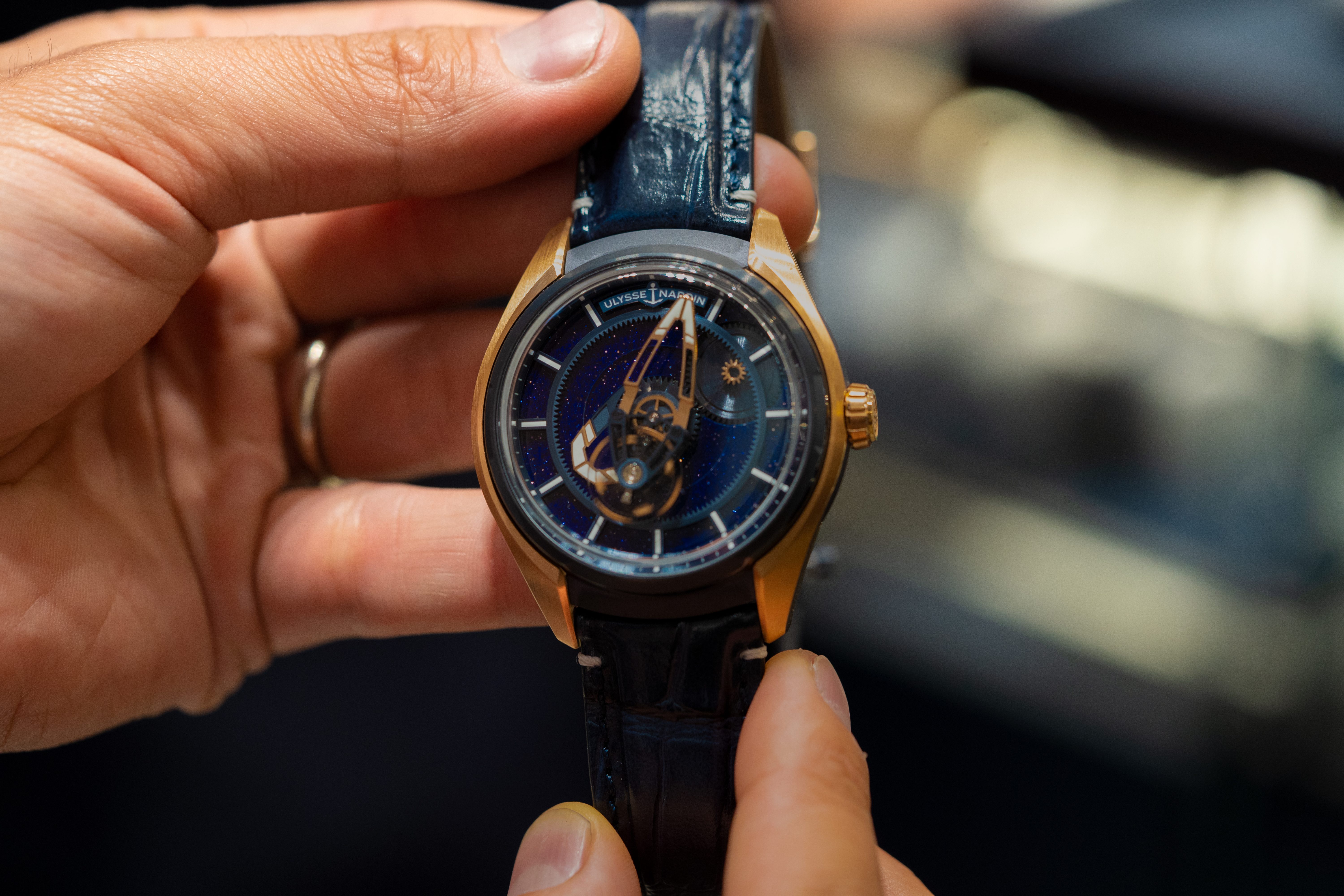
Okay amigo, it’s go-time. You’re finally ready to purchase a watch! You have no idea how excited I am for you to join the tribe (there are dozens of us, you know). The decision to make this leap may not have actually taken all that long, but for me as your wishful champion and guardian angel, it could not have come soon enough. I guess there is just one catch – now that you know you want to buy a watch, where the heck do you begin? Fret not, for I am writing this post to equip you with the right starter knowledge to know what you are looking at, what you should think about, and how you should approach it. This won’t be a complete education, but it will be enough to make you dangerous, and we all know that is everyone’s favorite level of competency.
Before we get started, I would like to make a side-note about what this article is not intended to be: a) a conversation around your budget, and b) an argument about the merits of an analog timekeeper against the Millennial-dominating behemoth that is the Apple Watch. Trying to talk about budgeting for watches and financials is a pretty big can of worms and only you know what you are comfortable spending at the end of the day. Similarly, trying to argue against the Apple Watch is a tough sell – it does literally everything a “normal” watch can do much better. Our conversation will presuppose that you have already arrived at the right destination.
1. Know What Kind of Watch You Are Looking At
Probably a good light refresher or even a new lesson for the unfamiliar, but analog watches typically come in two overarching categories – mechanical and quartz. At a very high level, mechanical watches are powered by movements, or engines primarily comprised of gears. Winding your watch (either by hand winding or automatic via an attached weight called a rotor that moves with your wrist) coils up the mainspring, which slowly unwinds and transmits power to the movement’s gears and balance wheel (which oscillates constantly to keep time). Quartz watches, on the other hand, use a battery to send an electric current through a quartz crystal in the shape of a tuning fork. The resulting vibrations, almost 32,000 per second, are converted by a circuit board into one electrical pulse per second.

Luckily, with just a few exceptions it is fairly easy to tell the difference between both types. Constant ticking equals mechanical, while one step at a time equals quartz. Accuracy implication – quartz watches are far better for time keeping, landing somewhere in the +15/30 seconds per month range. Monetary implication – quartz watches are plentiful, easy to manufacture, and accordingly cheap. On the other hand, mechanical watches typically become more expensive as their movements add complications and better finishing. All in all, you will likely elicit stronger feelings for mechanical watches as a new enthusiast. Quartz does have its time and place, however, and we’ll do deep dives on both another day.
2. There’s No Arguing With Taste
Before you go on a spending spree, it is also good to take a quick step back and figure out exactly what kind of watches you like. Configurations are plentiful, so it pays to get acquainted with the most common of the bunch. Here are 5 very often-seen types of watches that most people tend to start with.
- Dive Watches: A minimum of 200 meters of water resistance, a rotating bezel for tracking elapsed time as it relates to oxygen usage, high contrast legible dials, and hopefully a screw down crown. We’re talking the iconic Rolex Submariner, if you need something easy to picture.
- Dress Watches: Slim, refined, usually smaller case dimensions, minimal water resistance in the 30-meter range (don’t drop it into the sink), and should fit under shirt / suit cuffs easily. I think of time-only watches first, but that isn’t a must-have characteristic. To sample dress watch elegance, I recommend examining the Omega De Ville or Jaeger Le-Coultre’s Master Ultra Thin Moon.
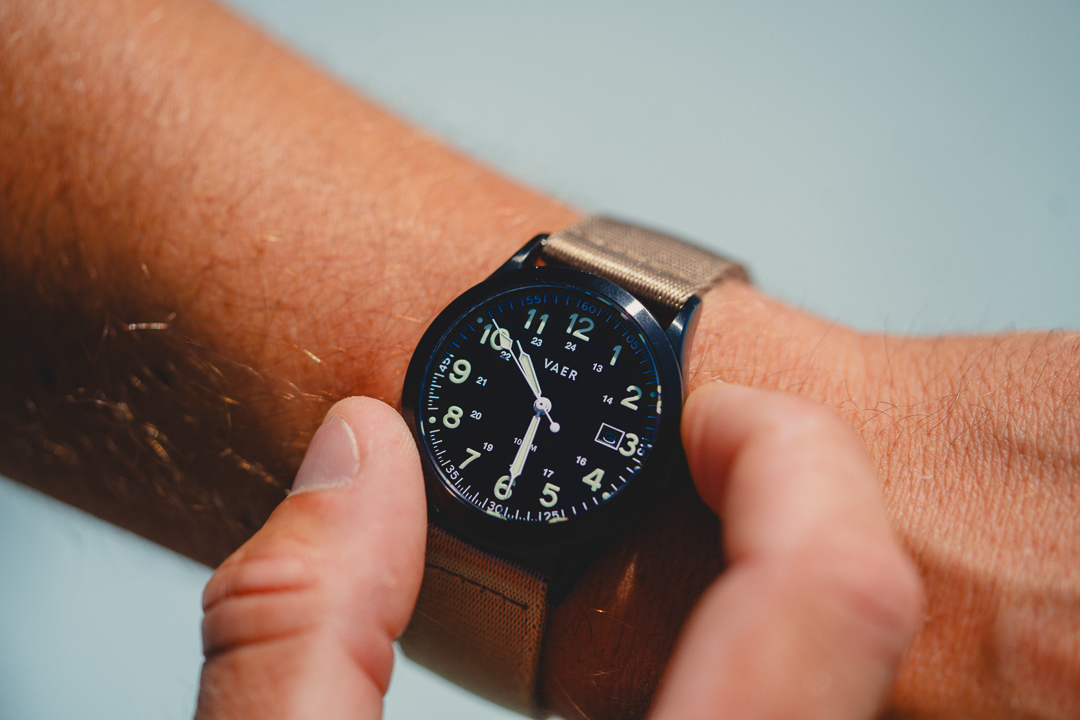
- Field Watches: Rugged design, brushed steel surfaces, decent water resistance in the 100-meter range or better, and a highly legible dial perhaps with Arabic numerals plus a date function. In my mind, field watches are the most nebulous of the mainstream groupings. Google Hamilton’s Khaki Field King Auto for a solid specimen in this category.
- Chronographs: These watches have stopwatch complications and utilize additional sub dials within the main dial to track time after starting said stopwatch. There’s usually an upper pusher, meant to start the stopwatch, and a bottom pusher to reset it. Think time-sensitive events like racing or trying to land your crippled spacecraft back on Earth. The Omega Speedmaster with its tachymeter bezel is the quintessential definition of a chronograph.
- GMT Watches: These watches have an external rotating bezel like dive watches, but the bezel is used instead to track a second time zone in coordination with the new addition of a GMT hand on the watch (typically a long hand with an arrow at the end). They come in two configurations, the jumping GMT hand (“office” or “caller” GMT) and the jumping local hour hand (“true” or “flyer” GMT). Rolex’s GMT Master II is a good place to start. Quick note here that GMT watches are not the same as pilot watches, which may have GMT functionality in addition to a slide rule or another complication.

I believe the best thing you can do is put watches from each category side by side in your web browser and cross-examine yourself with the questions “Which of these speak to me the most?” and “Which of these watches most complement my lifestyle?” Follow the heart with that first question, and then let your brain do the talking with the second one. The answers you come up with should inform where the search begins.
3. The Golden Rule
Okay, we’ve established what watches are and can be. The most important lesson to learn now, and my direct rejection of today’s materialist climate, is the easiest to forget: buy this watch for you. Nobody is going to notice your watch except other watch nerds. Your significant other will most certainly give you a scowl if you try to impart your excitement upon them (hypothetically, of course; not that I know from experience). Buying watches in order to impress friends and extract a higher level of respect from them is also folly. You are playing in a very niche sector of personal expression – if social acknowledgment is what you crave, it is important to remember that luxury goods do not constitute a personality. We should buy watches based solely on how they make us feel. As an extension of that, we need to be picky and scrutinize every aspect of a watch before voting with our dollars.
4. Avoid Substitutions on the Menu
There is no replacing the real thing. This applies to a myriad of pursuits and passions, but nowhere is it truer than when purchasing a watch. The largest pitfall lies within instant gratification – perhaps you can’t afford that timeless Rolex Explorer right now, but you can afford something in Aisle 5 where the homages are being stocked at eye-level. What you will quickly discover is that soon your brain will gravitate back towards its original love. The impulse buy will feel good for a few weeks, but in the end, you will likely sell it for a loss or what is better known as the “cost to rent.” From someone who knows this pain firsthand, I advise you to save your money and sit on it, at length if necessary, until you can truly buy the watch your heart desires. A fool and his money are soon parted – I know you are smarter than that.
5. In the Metal
In the age of social media, it is easy to fall into the trap of looking at watches in your feed and thinking they should be an instant add to the collection. To a certain extent, consuming this media can be helpful – you have access to endless, high quality macro photography content that can help inform what you value in a timepiece. However, this type of content also has a way of warping our perception regarding how watches are truly experienced in person. Beware of “Instagram Watches,” watches that impress online but ultimately fall flat face to face, for their sirens’ call sings eagerly into the night sky to trick you into a poor purchase.
The best remedy for this ailment is to identify a watch you like, go see it in person, and scrutinize the details. A titanium watch will likely have a warm, earthy tone up close versus a model made of polished 316L stainless steel. Watches that can sound appropriately sized on paper may wear larger than intended due to not having a bezel or having a non-round case shape. Think about case diameter – 38MM may not sound that different than 40MM up front, but miniscule changes like this make a huge impact when it comes to something as small as a watch. When you add in lug to lug as a measurement, that can put wearability dangerously upside down. All of these things combine to make watches very complicated, so like I said earlier, go see watches in person before buying if you have the ability to do so.

6. Buy the Seller, Not the Watch
The world of wrist-watches is fraught with peril – franken watches constructed out of spare parts, outright fakes, and scammers who have no intention of selling you a watch are common enemies of the everyday honest buyer. Do yourself a favor and run a diligence checklist against secondary market or private sellers. Can verified references be obtained? Does the seller report with multiple systems of feedback, such as eBay, Reddit, Chrono24 or Watchuseek? Is there a common online name you can google that may provide insight into any previous customer complaints? These are just a few questions you should set your mind to before making any non-brand new additions to the watch box.
A word of warning about large online retailers like JomaShop and Watchmaxx – make sure you call these companies directly and confirm they have the watch you are eyeballing. More often than not, particularly when it concerns references of limited production, these retailers will list said watches for sale but not actually have them in stock. You end up purchasing a watch with a much longer shipping time than expected, if it ever comes at all. Always make sure to call online retailers and confirm that they have the model you are looking for in stock before placing an order.
7. Visualization of the Possible
A common mistake of new enthusiasts is only being able to visualize a watch with the strap it is paired with in advertisement photos. Public Service Announcement: they are in fact interchangeable. In a world where a wide range of prices, complications and materials tend to stratify access to brands, straps are the true defenders of democracy. New straps can definitively transform a watch’s profile and wearability, as well as revitalize interest in collection mainstays that may have fallen out of favor. They can also help to dress down or dress up watches that may otherwise seem inappropriate for a particular occasion.
Distressed leather, NATO-style, rubber, metal bracelets, perlon, etc. are all excellent candidates depending on the watch at hand. As for actually swapping out said straps, you can purchase a spring bar tool, the universal tool used for removing and replacing straps, for as little as $10. These tools have prongs which can depress the springs in the bars (hence the name) that hold straps taught between the lugs of a watch. No special schooling or jeweler required!
Word to the wise: if you are buying new and there is an option to purchase with the steel bracelet, I recommend that you do so. You’ll save a premium trying to find that bracelet later. Plus, OEM straps tend to have a slight cardboard quality to them… it is a consistent weak spot amongst major brands. Aftermarket shops such as Delugs, Veblenist, and Crown & Buckle can offer you far superior options in terms of both materials and colorways.

8. Please Show Your Papers, Sir
They are often a forgotten element that is pushed aside when the mail man finally delivers your brand new watch to your door, but boxes and papers are actually a pretty important piece of the puzzle. The further up you go in the watch brand food chain, the harder it can be to make a sale and get cash quickly. Boxes, and especially the papers or receipt that came with the watch, help prospective buyers know that you are legitimate enough to take a chance on with their own money. I recommend finding a bin or safe where you can store all your watch related items safely without threat of deterioration. You will thank yourself later when you decide that, yet again, it is time to let go of some watches in the quest to get another one.
That’s a wrap, folks! I hope you found this post helpful with some good tidbits to consider before making any purchasing decisions. I personally would love to know if you have other recommendations to add to the list. Let me know by reaching out or commenting below.


Leave a Reply